
FileMaker as Enterprise Infrastructure, Not Just a Database
There Is More Than One Version of FileMaker
There is the version of FileMaker that lives in a small office.
A solution built quickly to solve an immediate problem. One person creates it, a few users depend on it, and it handles the daily work.
That version exists.
But there is another version of FileMaker.
FileMaker As A Business Platform
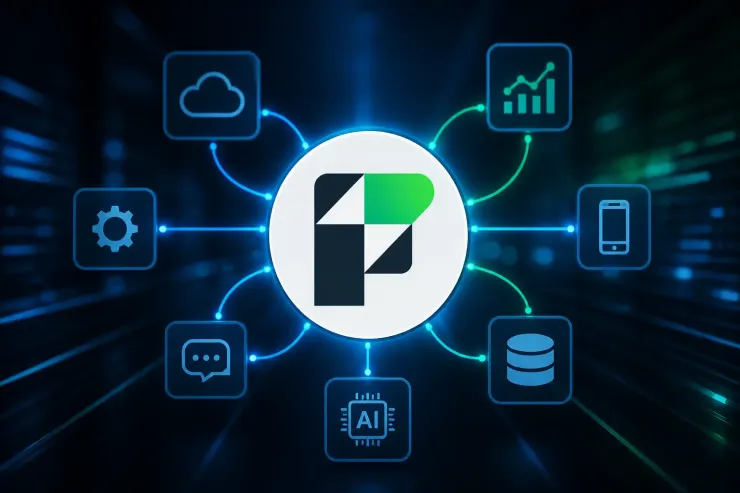
In larger environments, FileMaker becomes the system that connects different parts of the business.
The Data API can feed operational data into dashboards, mobile apps, and external platforms.
Claris Connect can trigger workflows when records change.
AI assistants connected through MCP can allow users to ask questions in plain language and get answers from their business data without opening layouts or searching through records.
The difference is not the platform.
The difference is how the system was designed.
Security Starts Before The First Layout
A serious FileMaker system does not treat security as something added later.
Access rules, privilege sets, and data separation need to be considered from the beginning.
Who can see what?
Who can edit what?
Which users should have access to specific records?
These decisions affect the entire structure of the solution.
Adding security after everything is built usually means fixing problems that could have been avoided.
APIs Turn FileMaker Into A Connected System
FileMaker becomes much more powerful when it is connected to the rest of the business.
The Data API, OData, and integrations allow FileMaker to work alongside:
- Customer relationship systems.
- Accounting platforms.
- Web portals.
- Reporting tools.
- Other business applications.
A standalone database stores information.
A connected system helps run operations.
Good Dashboards Start With Good Data
A dashboard is only as reliable as the data behind it.
A beautiful chart can still tell the wrong story if the data contains duplicates, inconsistent entries, or outdated processes.
Before building reports, the foundation needs attention:
- Clear data entry rules.
- Validation.
- Deduplication.
- Consistent workflows.
- Clean relationships.
The goal is not just to display data.
The goal is to trust it.
Building For The Future
FileMaker has always been capable of serious business applications.
The question is whether the solution was designed to take advantage of that capability.
Security, integrations, automation, and data quality are not things to think about later.
They are what turns a database into a business backbone.
Recent comments
No comments yet.